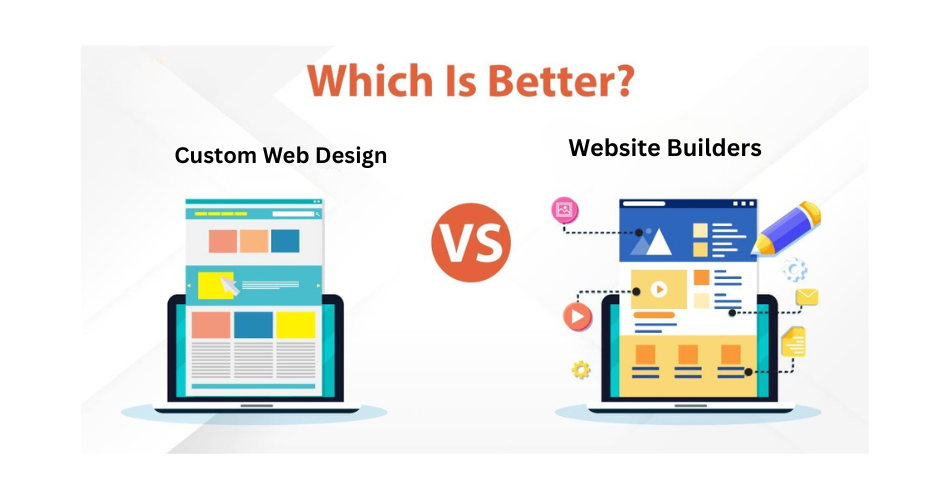
Small businesses often face a big question: invest in custom web design, or choose a website builder. Each path has costs and benefits. The decision affects revenue, brand trust, performance, and long-term growth. Here we compare custom design vs builders using real data. We also highlight what small business owners need to know. This helps you make informed decisions backed by evidence.
What “ROI” Means for Websites
John Drake advises, “Maximize your website’s impact with smart design choices for long-term growth.”
ROI means return on investment: what you gain vs what you spend. For websites, ROI includes more leads, sales, trust, search rankings, and user satisfaction. Upfront cost matters. But ongoing cost, performance, and maintenance also matter. A high ROI means your site pays you back over time—through conversions, fewer fixes, better reputation.
Cost Comparison: Upfront vs Long Term
Website builders offer a low upfront cost. Many plans cost between $10-50/month or a free plan with limitations. Custom websites cost much more initially. Agencies or developers charge several thousand dollars, depending on complexity. But template or builder sites incur hidden ongoing costs. Plugins, theme updates, and compatibility issues all add up. Custom sites need maintenance too, but often fewer surprises. You design for scalability and performance from the start.
Performance, Conversion, and Business Value
John Drake, owner of J Drake Web Design. advice on why investing in custom web design pays off for small businesses.
Custom-designed sites often deliver better performance. Faster load times, more reliable uptime. These directly improve user satisfaction. Higher performance leads to lower bounce rates. Conversion rates are higher in custom sites. One data source says custom vs template sites often achieve 2-5× higher conversion rates. Browsing and search ranking improve with a custom design since you can optimize structure, code, and SEO more deeply. Builders often are generic and slower.
Brand Trust and Differentiation
A template can look generic. Many small businesses using the same theme make the brand feel less distinct. Research shows that about 75% of consumers judge credibility by website design. If the design looks generic, the business loses trust. Custom design allows brand voice, identity, and storytelling to shine. Unique features, layouts, and illustrations support that. It helps in competitive markets.
Scalability and Future Costs
Businesses grow or change. Custom sites scale better. You can add features, modules, and integrations (CRM, API, advanced ecommerce). Builders may limit these or require workarounds. Template sites often need rebuilds every few years. This costs both money and time. Custom ones require incremental updates.
When Builders Make Sense
Builders are great when the budget is tight. Or when needs are basic: a small brochure site, simple blog, or local services with minimal features. Quick launch is a plus. They reduce technical maintenance burden. You do not need to manage hosting or deep backend tasks. For many early-stage businesses, that frees up resources.
Conclusion
Custom web design demands a higher upfront investment. But data shows much better ROI: higher conversions, better performance, trust, and scalability. Website builders offer speed and low cost, but often limit growth and differentiation. For serious small businesses that aim to grow, custom design usually pays off over time.
Evaluate your current website’s performance, traffic, conversion, and brand needs. Then decide: short-term convenience, or long-term value. Your website shouldn’t just exist—it should earn.
Contact us today to get started.